Dave is an extremely gifted clairvoyant who finds out specific financial information.

Kamis, 08 November 2012

Mysteries of Magic
The Impossible made Possible
This is a great documentary series from 1997 directed by Mel Morpeth. It features magic luminaries like Penn and Teller and this series was apparently the first time the ever silent Teller publicly let himself be interviewed. I particularly like the first and last of the episodes. The first is on the history of magic, the second on illusions and the third and last is about death defying stunts.The Learning Channel is known for its informative programs, and the Mysteries of Magic series is no exception. The first DVD in the trio, The Masters of Mystery, takes the viewer on a magical journey from the campfires of ancient tribes to the bright neon lights of Las Vegas and delivers a concise history of illusionists throughout history. Featuring interviews with top magicians of today (such as Lance Burton, Eugene Burger, and Jeff McBride), The Masters of Mystery uncovers the origins of the many modern tricks that still make audiences wonder "How did they do that?" Beginning with the magicians of ancient Egypt who translated age-old beliefs into physical acts of illusion, the DVD offers us a glimpse into the religious ceremonies that gave early magic makers their first platform for performance.
Using clips from modern television specials, the disc provides a definitive history of the classic "Cups and Balls" routine, possibly the oldest magic trick ever recorded. We are also educated about the book The Discovery of Witchcraft, written by a magician to expose the tricks of the trade in order to save many wizards of the time from being burned at the stake.
Technically, the DVD doesn't offer much. In fact, the greatest trick involved may be getting the disc out of the box it comes in--and the menu selection is a bit lacking in extras. The content, however, provides plenty of insight into the medium without revealing any secrets. --Zachary Lively

The old theory that magical illusions are all done with smoke and mirrors is proven in The Impossible Made Possible. This episode of the Learning Channel's Mysteries of Magic series explores the origins of some of magic's most intriguing illusions.Beginning with the 1790s multimedia show phantasmagoria--a performance using a simple magic lantern and wall projections--the documentary provides insight into the early special effects that made magicians legendary. Peppered with interview segments conducted with many modern artists, the DVD shows us how magicians of the past harnessed the powers of sound, light, optical illusions, and even narcotics to bewilder their audiences.
The program also features the "Allied Arts," which are illusions such as fire-eating and -breathing, and a clip from an old Laurel and Hardy film spotlighting the funny and engaging performance of a regurgitationist. There are marvelous and entrancing automatons, tricks from the early days of electricity, and finally, the invention that eventually brought the death of the music hall performer: motion pictures.
Aside from a simple scene-access menu and a brief summation of the factoids behind the production of the program, the DVD has little to offer technically. It is the content, however, that makes the disc truly magical. --Zachary Lively
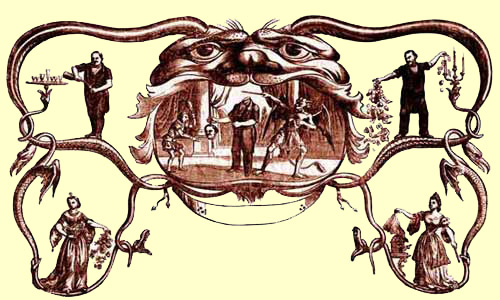
Part three of the Mysteries of Magic series examines the fearless magicians who risk their lives for their art and to entertain the audience. Features the sword basket, guillotine, and cannonball escape tricks. ~ Heather M. Fierst, RoviIn this final episode we get to hear the history of one of the most famous illusions of all time the 'sawing a lady in half', including footage of Richiardi's infamous most gory and grotesque version.
Selasa, 06 November 2012
Creating Art FOR the Crowd
--> ..."the reason she'd never heard of me was because I was famous."
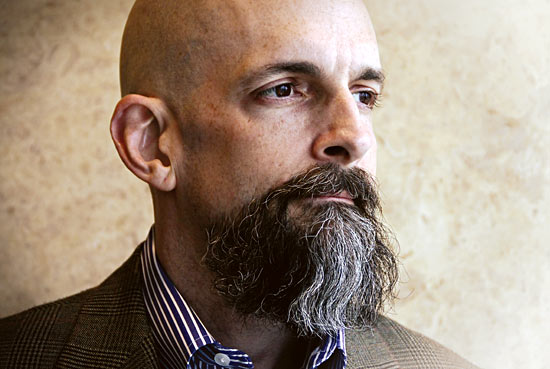 |
| Neil Stephenson, writer and honorary Showman. |
[A] while back, I went to a writers' conference. I was making chitchat with another writer, a critically acclaimed literary novelist who taught at a university. She had never heard of me. After we'd exchanged a bit of of small talk, she asked me "And where do you teach?" just as naturally as one Slashdotter would ask another "And which distro do you use?"
I was taken aback. "I don't teach anywhere," I said.
Her turn to be taken aback. "Then what do you do?"
"I'm...a writer," I said. Which admittedly was a stupid thing to say, since she already knew that.
"Yes, but what do you do?"
I couldn't think of how to answer the question---I'd already answered it!
"You can't make a living out of being a writer, so how do you make money?" she tried.
"From...being a writer," I stammered.
At this point she finally got it, and her whole affect changed. She wasn't snobbish about it. But it was obvious that, in her mind, the sort of writer who actually made a living from it was an entirely different creature from the sort she generally associated with.
And once I got over the excruciating awkwardness of this conversation, I began to think she was right in thinking so. One way to classify artists is by to whom they are accountable.
The great artists of the Italian Renaissance were accountable to wealthy entities who became their patrons or gave them commissions. In many cases there was no other way to arrange it. There is only one Sistine Chapel. Not just anyone could walk in and start daubing paint on the ceiling. Someone had to be the gatekeeper---to hire an artist and give him a set of more or less restrictive limits within which he was allowed to be creative. So the artist was, in the end, accountable to the Church. The Church's goal was to build a magnificent structure that would stand there forever and provide inspiration to the Christians who walked into it, and they had to make sure that Michelangelo would carry out his work accordingly.
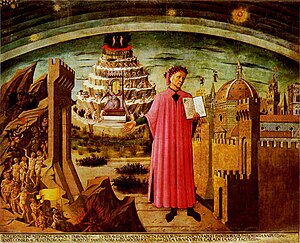
Dante holding his most famous book.
Similar arrangements were made by writers. After Dante was banished from Florence he found a patron in the Prince of Verona, for example. And if you look at many old books of the Baroque period you find the opening pages filled with florid expressions of gratitude from the authors to their patrons. It's the same as in a modern book when it says "this work was supported by a grant from the XYZ Foundation."
Nowadays we have different ways of supporting artists. Some painters, for example, make a living selling their work to wealthy collectors. In other cases, musicians or artists will find appointments at universities or other cultural institutions. But in both such cases there is a kind of accountability at work.
A wealthy art collector who pays a lot of money for a painting does not like to see his money evaporate. He wants to feel some confidence that if he or an heir decides to sell the painting later, they'll be able to get an amount of money that is at least in the same ballpark. But that price is going to be set by the market---it depends on the perceived value of the painting in the art world. And that in turn is a function of how the artist is esteemed by critics and by other collectors. So art criticism does two things at once: it's culture, but it's also economics.
There is also a kind of accountability in the case of, say, a composer who has a faculty job at a university. The trustees of the university have got a fiduciary responsibility not to throw away money. It's not the same as hiring a laborer in factory, whose output can be easily reduced to dollars and cents. Rather, the trustees have to justify the composer's salary by pointing to intangibles. And one of those intangibles is the degree of respect accorded that composer by critics, musicians, and other experts in the field: how often his works are performed by symphony orchestras, for example.
 |
| Beowulf |
The novel is a very new form of art. It was unthinkable until the invention of printing and impractical until a significant fraction of the population became literate. But when the conditions were right, it suddenly became huge. The great serialized novelists of the 19th Century were like rock stars or movie stars. The printing press and the apparatus of publishing had given these creators a means to bypass traditional arbiters and gatekeepers of culture and connect directly to a mass audience. And the economics worked out such that they didn't need to land a commission or find a patron in order to put bread on the table. The creators of those novels were therefore able to have a connection with a mass audience and a livelihood fundamentally different from other types of artists.
Nowadays, rock stars and movie stars are making all the money. But the publishing industry still works for some lucky novelists who find a way to establish a connection with a readership sufficiently large to put bread on their tables. It's conventional to refer to these as "commercial" novelists, but I hate that term, so I'm going to call them Beowulf writers.
But this is not true for a great many other writers who are every bit as talented and worthy of finding readers. And so, in addition, we have got an alternate system that makes it possible for those writers to pursue their careers and make their voices heard. Just as Renaissance princes supported writers like Dante because they felt it was the right thing to do, there are many affluent persons in modern society who, by making donations to cultural institutions like universities, support all sorts of artists, including writers. Usually they are called "literary" as opposed to "commercial" but I hate that term too, so I'm going to call them Dante writers. And this is what I mean when I speak of a bifurcated system.
Like all tricks for dividing people into two groups, this is simplistic, and needs to be taken with a grain of salt. But there is a cultural difference between these two types of writers, rooted in to whom they are accountable, and it explains what MosesJones is complaining about. Beowulf writers and Dante writers appear to have the same job, but in fact there is a quite radical difference between them---hence the odd conversation that I had with my fellow author at the writer's conference. Because she'd never heard of me, she made the quite reasonable assumption that I was a Dante writer---one so new or obscure that she'd never seen me mentioned in a journal of literary criticism, and never bumped into me at a conference. Therefore, I couldn't be making any money at it. Therefore, I was most likely teaching somewhere. All perfectly logical. In order to set her straight, I had to let her know that the reason she'd never heard of me was because I was famous.
All of this places someone like me in critical limbo. As everyone knows, there are literary critics, and journals that publish their work, and I imagine they have the same dual role as art critics. That is, they are engaging in intellectual discourse for its own sake. But they are also performing an economic function by making judgments. These judgments, taken collectively, eventually determine who's deemed worthy of receiving fellowships, teaching appointments, etc.
The relationship between that critical apparatus and Beowulf writers is famously awkward and leads to all sorts of peculiar misunderstandings. Occasionally I'll take a hit from a critic for being somehow arrogant or egomaniacal, which is difficult to understand from my point of view sitting here and just trying to write about whatever I find interesting. To begin with, it's not clear why they think I'm any more arrogant than anyone else who writes a book and actually expects that someone's going to read it. Secondly, I don't understand why they think that this is relevant enough to rate mention in a review. After all, if I'm going to eat at a restaurant, I don't care about the chef's personality flaws---I just want to eat good food. I was slagged for entitling my latest book "The System of the World" by one critic who found that title arrogant. That criticism is simply wrong; the critic has completely misunderstood why I chose that title. Why on earth would anyone think it was arrogant? Well, on the Dante side of the bifurcation it's implicit that authority comes from the top down, and you need to get in the habit of deferring to people who are older and grander than you. In that world, apparently one must never select a grand-sounding title for one's book until one has reached Nobel Prize status. But on my side, if I'm trying to write a book about a bunch of historical figures who were consciously trying to understand and invent the System of the World, then this is an obvious choice for the title of the book. The same argument, I believe, explains why the accusation of having a big ego is considered relevant for inclusion in a book review. Considering the economic function of these reviews (explained above) it is worth pointing out which writers are and are not suited for participating in the somewhat hierarchical and political community of Dante writers. Egomaniacs would only create trouble.
Mind you, much of the authority and seniority in that world is benevolent, or at least well-intentioned. If you are trying to become a writer by taking expensive classes in that subject, you want your teacher to know more about it than you and to behave like a teacher. And so you might hear advice along the lines of "I don't think you're ready to tackle Y yet, you need to spend a few more years honing your skills with X" and the like. All perfectly reasonable. But people on the Beowulf side may never have taken a writing class in their life. They just tend to lunge at whatever looks interesting to them, write whatever they please, and let the chips fall where they may. So we may seem not merely arrogant, but completely unhinged. It reminds me somewhat of the split between Christians and Faeries depicted in Susannah Clarke's wonderful book "Jonathan Strange and Mr. Norrell." The faeries do whatever they want and strike the Christians (humans) as ludicrously irresponsible and "barely sane." They don't seem to deserve or appreciate their freedom.
...
Later at the writer's conference, I introduced myself to someone who was responsible for organizing it, and she looked at me keenly and said, "Ah, yes, you're the one who's going to bring in our males 18-32." And sure enough, when we got to the venue, there were the males 18-32, looking quite out of place compared to the baseline lit-festival crowd. They stood at long lines at the microphones and asked me one question after another while ignoring the Dante writers sitting at the table with me. Some of the males 18-32 were so out of place that they seemed to have warped in from the Land of Faerie, and had the organizers wondering whether they should summon the police. But in the end they were more or less reasonable people who just wanted to talk about books and were as mystified by the literary people as the literary people were by them. "It is well worth clicking over to Slashdot and read the full interview.
Minggu, 04 November 2012
Penn and Teller in India

The journey they take as magicians to meet fellow crafts men living in rather simple ways is very interesting. They set out to discover the Indian Rope trick but the show is much more than that. It's a respectful look at street magicians in India. To put the two intrepid suit wearing magicians in touch with the apparently lowly caste of gypsies to which the street magicians belong they have the author of the superb study of Indian Street Magic; the Net of Magic by Lee Siegel.
It is a beautiful and insightful look at the history and origin of Magic by two of my favorite magicians. Enjoy.
 |
| The quest for the Indian Rope Trick |
Kamis, 01 November 2012
The Great Escape
This is a nice interview with Yours Truly, which also is the first to mention the Illuminated Showman blog by name. Thanks to The Music.
THE GREAT ESCAPE
TheMusic.com.au
Paul Ransom has always wondered where a contortionist’s bendy spine may take them. He finally gets to ask La Soiree’s Captain Frodo.
Whenever anyone says ‘contortionist’ the first thing that springs to mind is, well, y’know, I mean, do they, would they? Have you? The man on the other end of the line laughs and teasingly responds, “It’s best left to the imagination. I do make a comment about that and do a quick demonstration during my tennis act, so…“
The contortionist in question is Captain Frodo, a Norwegian-born, Melbourne-based blogger, philosopher and bendy showman. As part of the record-busting nu-circ juggernaut that is La Soiree, Frodo has shoved himself through tennis racket heads and travelled the world.
“It is a pretty obscure thing,” he admits of his incredible, double-jointed career. As the child of a professional magician though, a life on the stage was always likely. “I guess every kid thinks their dad can do everything, but my dad kinda could; producing candies at parties and all that sorta stuff,” he recalls. “So yeah, I wanted to be in the show even before I even really knew what that was. I just knew that you went out on stage and stood around for a while. Only later I realised you actually had to do something.”
Encouraged by his father, the young Frodo developed his own magic act based around torn up newspapers. However, before long a developing Houdini obsession led him to contortionism. “I just wanted to do an escape act,” he explains. “Before that I hadn’t been aware of the full range I had with my shoulders and so the first performance I did that was contortion-based was an escape from a straightjacket my dad ordered from America. It was only later I realised that some of that stuff I was doing inside the jacket was actually more exciting than the escape.”
If it all sounds like a vaudevillian throwback, perhaps it is. As Captain Frodo would have it, “I can’t help but see a similarity to the ‘20s, the golden days of circus and the Depression that came afterwards.”
Either way, the astounding success of La Soiree shows no sign of abating. Having already broken Opera House records and had their Melbourne Festival season blow out past six weeks, the burlesque cabaret circus continues to connect with audiences. According to Frodo, it’s because it’s more real. “You don’t have to suspend your disbelief like you do in a theatre. It’s very visceral,” he argues. “Perhaps in hard times people can enjoy the freedom that you see in the show. Y’know, it’s like anything’s possible.”
As an erstwhile philosophy student (and creator of The Illuminated Showman blog), Frodo clearly thinks deeply about being on stage. “Finding myself in an occupation that, when people first hear what you do, they go, ‘But do you have a real job?’ I wanted to demonstrate that what we do is actually as deep or as shallow as you make it.”
Flanked by fellow freaks such as David ‘Bath Boy’ O’Mer, Mario: Queen Of The Circus and lycra diva Le Gateau Chocolat, Frodo is in no doubt about the undiluted power of real entertainment. “With the world becoming more digital, people realise, ‘Ah, that’s how it feels’. Y’know, you sit there, the lights go down and master showmen give you the most polished ten minutes of their life and it’s an experience that happens now.“
WHAT: La Soiree
WHEN & WHERE: Until Thursday 29 November (extended season), Forum
Paul Ransom

Sabtu, 27 Oktober 2012
Learned pigs and Fireproof Woman
Based on Ricky Jay's book of the same title, this special was made up of a combination of magic, juggling, amazing feats, stunts, and performances, including a musical performance on wine glasses, a human calculator who could determine cube-routes of numbers in her head, and an antique acrobatic clockwork doll.

This is an hour long variety show, cheesy but with some great stuff in there including Ricky Jay, Steve Martin, Michael Moschen, Jamie Turner. It reminds me of a Muppet show episode.
Ricky Jay is one of the world's great sleight-of-hand artists. He is also a most unusual and talented scholar, specializing in the bizarre, exotic, and fantastic side of the human species. The youngest magician to have appeared on television, Jay has become well known for his astonishing stage show as well as for his cameos in such movies as Glengarry Glen Ross and, most recently, Boogie Nights.
Jay's unparalleled collection of books, posters, photographs, programs, broadsides, and, most important, data about unjustifiably forgotten entertainers all over the world made this unique book possible. An investigation into the inspired world of sideshows, circuses, and singularly talented performers, Learned Pigs and Fireproof Women is history of the most unusual -- and irresistible -- sort.
Kamis, 25 Oktober 2012
The Way of the Showman
 The way of the showman
is the way between
Between real and imagined
Between the illuminated entrance
and the "Exit Only" sign
Along the midway
there are rides, carousels and carnies
You choose which one you get on
Some rides go round and round
and round and round
When you get off are back where you started?
 Some says that is going nowhere
But you don't get on a ride
to go anywhere.
You get on for the experience.
You don't enter the carnival
because you want to get to the end
Or as T S Elliot said:
We shall not cease from exploration
And the end of all our exploring
Will be to arrive where we started
And know the place for the first time
Life is a Carnival
You don't know what's waiting
 around the bend by the ghost train
Or behind the sideshow tent
But you know
it's gonna be interesting,
weird and beautiful -
In its own unique way.
Such is the Way of the Showman
Join us
You will love it
Rabu, 24 Oktober 2012
Ricky Jay and his 52 Assistants
I first saw Ricky Jay on the Paul Daniels show. The routine he performed was a card throwing routine. He threw playing cards with great precision and force. I was amazed I had never seen anything like it. I later found out he has also written a book on the subject; Cards as Weapons.
I was first made aware of this remarkable show when a friend in Edinburgh sent me a DVD taped of a tape of a tape... This is a great combination of well crafted patter, remarkable skills, unusual feats and solid showmanship.
I hope you enjoy it.
I was first made aware of this remarkable show when a friend in Edinburgh sent me a DVD taped of a tape of a tape... This is a great combination of well crafted patter, remarkable skills, unusual feats and solid showmanship.
I hope you enjoy it.
Senin, 22 Oktober 2012
So You Want to be a Writer

Or as the person posting the clip below says in his description:
"This is Charles Bukowski telling Charles Bukowski how to write like Charles Bukowski."I dont know if I believe you need to have a starry furnace in your belly to find a purposeful existence from expressing them through art. If it makes you happy, its a start, and if you persist it will eventually make others happy too.
so you want to be a writer
if it doesn’t come bursting out of you
in spite of everything,
don’t do it.
unless it comes unasked out of your
heart and your mind and your mouth
and your gut,
don’t do it.
if you have to sit for hours
staring at your computer screen
or hunched over your
typewriter
searching for words,
don’t do it.
if you’re doing it for money or
fame,
don’t do it.
if you’re doing it because you want
women in your bed,
don’t do it.
if you have to sit there and
rewrite it again and again,
don’t do it.
if it’s hard work just thinking about doing it,
don’t do it.
if you’re trying to write like somebody
else,
forget about it.
if you have to wait for it to roar out of
you,
then wait patiently.
if it never does roar out of you,
do something else.
if you first have to read it to your wife
or your girlfriend or your boyfriend
or your parents or to anybody at all,
you’re not ready.
don’t be like so many writers,
don’t be like so many thousands of
people who call themselves writers,
don’t be dull and boring and
pretentious, don’t be consumed with self-
love.
the libraries of the world have
yawned themselves to
sleep
over your kind.
don’t add to that.
don’t do it.
unless it comes out of
your soul like a rocket,
unless being still would
drive you to madness or
suicide or murder,
don’t do it.
unless the sun inside you is
burning your gut,
don’t do it.
when it is truly time,
and if you have been chosen,
it will do it by
itself and it will keep on doing it
until you die or it dies in you.
there is no other way.
and there never was.

{via BrainPickings}
Minggu, 21 Oktober 2012
Showmen, turn on immunosystems

The early Shamans, which we believe to have been proto-showmen using the very special and intimate connections of showmanship to actually heal the sick. The shamans role was that of healer, spiritual leader or guide so a mix between priest and doctor as well as a form of sacred entertainer. {You can read more about this Showman / Shaman link here the power of tricks, truth in reality and deception.}
"There is a simple explanation, says Trimmer: the immune system is costly to run - so costly that a strong and sustained response could dangerously drain an animal's energy reserves. In other words, as long as the infection is not lethal, it pays to wait for a sign that fighting it will not endanger the animal in other ways."As unique performers we do not have the luxury of being able to take sick days. During a run of shows at a festival we cant ring in and say we cant make it. Often, particularly in smaller companies or for certain in solo shows not showing up is not an option. SO I have myself experienced that I might feel a little under the weather during a season but as soon as it ends it becomes a full blown flu or something akin to it. There are even cases when I think I am well as can be only to find the first week of my holiday being hampered by a bug of some sort. If what the researchers below is true it would explain this phenomenon of "sickness on days off".
From an evolutionary stand point it makes a lot of sense to get sick, or to "give in to" the sickness when some stressor vanishes. The mechanism would of course have been more important when the stressor was a dangerous mammoth hunt, where not only your own life and those of the hunters was in danger but the possible starvation of the whole clan.
{It turns out that this idea was first proposed by Nicholas Humphrey which has recently been featured on this site.}
The article below is from the {New Scientist}
{06 September 2012 by Colin Barras}Evolution could explain the placebo effect
ON THE face of it, the placebo effect makes no sense. Someone suffering from a low-level infection will recover just as nicely whether they take an active drug or a simple sugar pill. This suggests people are able to heal themselves unaided - so why wait for a sugar pill to prompt recovery?New evidence from a computer model offers a possible evolutionary explanation, and suggests that the immune system has an on-off switch controlled by the mind.It all starts with the observation that something similar to the placebo effect occurs in many animals, says Peter Trimmer, a biologist at the University of Bristol, UK. For instance, Siberian hamsters do little to fight an infection if the lights above their lab cage mimic the short days and long nights of winter. But changing the lighting pattern to give the impression of summer causes them to mount a full immune response.Likewise, those people who think they are taking a drug but are really receiving a placebo can have a response which is twice that of those who receive no pills (Annals of Family Medicine, doi.org/cckm8b). In Siberian hamsters and people, intervention creates a mental cue that kick-starts the immune response.There is a simple explanation, says Trimmer: the immune system is costly to run - so costly that a strong and sustained response could dangerously drain an animal's energy reserves. In other words, as long as the infection is not lethal, it pays to wait for a sign that fighting it will not endanger the animal in other ways.Nicholas Humphrey, a retired psychologist formerly at the London School of Economics, first proposed this idea a decade ago, but only now has evidence to support it emerged from a computer model designed by Trimmer and his colleagues.According to Humphrey's picture, the Siberian hamster subconsciously acts on a cue that it is summer because food supplies to sustain an immune response are plentiful at that time of year. We subconsciously respond to treatment - even a sham one - because it comes with assurances that it will weaken the infection, allowing our immune response to succeed rapidly without straining the body's resources.Trimmer's simulation is built on this assumption - that animals need to spend vital resources on fighting low-level infections. The model revealed that, in challenging environments, animals lived longer and sired more offspring if they endured infections without mounting an immune response. In more favourable environments, it was best for animals to mount an immune response and return to health as quickly as possible (Evolution and Human Behavior, doi.org/h8p). The results show a clear evolutionary benefit to switching the immune system on and off depending on environmental conditions."I'm pleased to see that my theory stands up to computational modelling," says Humphrey. If the idea is right, he adds, it means we have misunderstood the nature of placebos. Farming and other innovations in the past 10,000 years mean that many people have a stable food supply and can safely mount a full immune response at any time - but our subconscious switch has not yet adapted to this. A placebo tricks the mind into thinking it is an ideal time to switch on an immune response, says Humphrey.Paul Enck at the University of Tübingen in Germany says it is an intriguing idea, but points out that there are many different placebo responses, depending on the disease. It is unlikely that a single mechanism explains them all, he says.
Kamis, 11 Oktober 2012
Beat Magazine interviews the Captain
[Captain Frodo] puts on a master class of physical comedy, as if the black and white films of Buster Keaton had come alive and actually were funny.
JACK FRANKLIN, Beat Magazine
The following is from an interview with yours truly from Beat Magazine in Melbourne in preparation for La Soiree's season in Melbourne starting October 11th with its first preview. (reading the direct transcription of my words from an interview they do sound convoluted... They would benefit for some editing...)
 |
| David O'mer from La Soiree. |
"La Soirée (rebadged from its Spiegeltent days of La Clique) is an absolutely wonderful, horrifying, impossible, astounding joy. It is a circus to stretch the sensibilities, a sideshow that has been given a full reign. It is as bawdy as it is sinfully beautiful. It is a true cabaret, not some grubby burlesque but a good old-fashioned variety show with full frontal nudity, coarse language and adult concepts are all expected, sometimes before you even make it to your seat. A rotating cast of miscreants form the rogue’s gallery that passes for a cast, each bringing a unique talent to bare in front of an ever more shocked and shrieking (with laughter or approval) audience. From the famous Bath Boy with his tight, wet, denim acrobatics through to the corpulent showstopper in spandex, Le Gateau Chocolat – no two acts are the same or even remotely similar to anything you have seen.
The show is about the personality of each performer: Captain Frodo, Frodo is his real name by the way, could be called just simple contortionist but that would be huge undersell. He first performed aged ten alongside his father, a magician, and the years of performance and showmanship shine brightly. He puts on a master class of physical comedy, as if the black and white films of Buster Keaton had come alive and actually were funny.
“I had been doing contortion stuff for a long time and you need to find your own angle on everything,” he says of his act. “Because of the stuff I have been given by nature, my act is a very visceral experience for people. People find it very challenging to watch. When you are doing it as a street show and people haven’t paid and are committed to sitting through something, then if what you do is too challenging to watch they cover their kids’ eyes or walk away. So to develop a character that is a bit slapstick in they style of Chaplin is a good thing since in that context ,if somebody gets a brick in the head it’s funny where as in real life it is a tragedy. So I have found a way to present something that by its very nature makes people uneasy and makes it palatable.La Soirée will be delighting those brave enough to attend at The Forum Theatre from Thursday October 11 through to Sunday November 18.
If you can get the crowd on your side, they will go with you much further than they thought. When you do take the crowd with you, when they give up their apprehension, their pleasure and excitement is shocking and exciting to them. “There might be people that disappear hankies, squeeze through tennis rackets or juggle knives better than us but the acts in this show transcend their talent so that it becomes about a story and a character, transporting the crowd to places they wouldn’t even have thought they would enjoy – it might have sounded vulgar or repulsive to them – but we change the rules to make it safe to enjoy.” BY JACK FRANKLIN
Bikini Kill - Carnival
Lyrics:
This is a song about the seedy underbelly of the carnival
The part that only the kids know about
This is a song about 16 year old girls giving carnies head
For free rides and hits of pot
I wanna go, I wanna go
I wanna go to the carnival
But it costs $16 yeah
I wanna go to the carnival
But I know it costs $16 now
Round, round, round...
Gonna lose $20 while I'm there
See the girls with the feathered hair
They're wearing plastic, not real leather
Boots that go way up to there
Round, round, round...
It's by the Lacey mall,
That's where you'll find me, yeah.

Rabu, 10 Oktober 2012
Freak Cards
These gorgeous trading cards of famous freaks are the creations of symbolist painter Gail Potocki. Most posters and cards made of freaks seem to only use them for their sensationalist value, these paintings on the other hand transcends their physical uniqueness.
The printing of the cards was done by the Century Guild and I believe there still are copies available. Click over and check them out here.
Gail Potocki also has a book out called The Union of Hope and Sadness which is worth checking out.


 {via coilhouse.net}
The printing of the cards was done by the Century Guild and I believe there still are copies available. Click over and check them out here.
Gail Potocki also has a book out called The Union of Hope and Sadness which is worth checking out.


Minggu, 30 September 2012
Selasa, 25 September 2012
Coney Island anno 1952

The Venice Film Festival Prize-winning documentary Coney Island, USA (1952), narrated by New York wit & journalist Henry Morgan, without totally trashing Coney Island is the first film to really get round to a bigger dose or reality than might be expected of a tourist film.

Throughout it retains an air of the macabre, weird dolls & mannequins, shouting barkers, eerie angles of whirling rides like the Virginia Wheel & the Cyclone, the screaming of frightened funseekers, hairy arms tearing tickets, the promise of being half-killed, humanity swarming like insects as Henry Morgan narrates with venomous irony, "You & I in the sun, you & I alone."
Shots are speeded up, blurry, distorted; the music rises in an industrialist beat shifting into happy carny sounds shifting into suspense notes.
Verging into horror documentary, the attitude of grotesquery never quite warns you away from Coney Island, but is a lot more honest than any earlier film, showing everything except the outright prostitution & pickpocketing.
{via Weird Wild Realm}
Selasa, 18 September 2012
Kurt Vonnegut on Writing
The advice in this clip is specifically aimed at writing a short story. The lesson we Showmen can take from it is by thinking of the short story like an act. In the Showman's work the act is the short story and the full evenings show; a novel.
And finally some thoughts on the structural shapes of stories and acts. DO take some time to ponder the similarities and what you can add of story to your act. It will greatly improve your understanding of your act. Further I would recommend thinking about your favorite acts, be it contortionists, magicians, acrobatics, handstands, clowning, stand up comedy - be it what it may - look at the act again with Story in mind and see what you learn...
- Use the time of a total stranger in such a way that he or she will not feel the time was wasted.
- Give the reader at least one character he or she can root for.
- Every character should want something, even if it is only a glass of water.
- Every sentence must do one of two things–reveal character or advance the action.
- Start as close to the end as possible.
- Be a sadist. No matter how sweet and innocent your leading characters, make awful things happen to them–in order that the reader may see what they are made of.
- Write to please just one person. If you open a window and make love to the world, so to speak, your story will get pneumonia.
- Give your readers as much information as possible as soon as possible. To heck with suspense. Readers should have such complete understanding of what is going on, where and why, that they could finish the story themselves, should cockroaches eat the last few pages.
And finally some thoughts on the structural shapes of stories and acts. DO take some time to ponder the similarities and what you can add of story to your act. It will greatly improve your understanding of your act. Further I would recommend thinking about your favorite acts, be it contortionists, magicians, acrobatics, handstands, clowning, stand up comedy - be it what it may - look at the act again with Story in mind and see what you learn...
Minggu, 16 September 2012
Jung, Ferris Wheels & The Meaning of Life
I have seen many people die because life for them was not worth living. From this I conclude that the question of life's meaning is the most urgent question of all.

Albert Camus
If you are willing, and you have to be since you are here to take this complex journey through the sublimely meaningful to the outright idiotic.
"Which element we think outweigh the other, whether meaninglessness or meaning is a matter of temperament. If meaninglessness were absolutely preponderant, the meaningfulness of life would vanish to an increasing degree with each step in our development. But that is – or seems to me – not the case. Probably, as in all metaphysical questions, both are true: life is – or has – meaning and meaninglessness. I cherish the anxious hope that meaning will preponderate and win the battle”“Life is crazy and meaningful at once. And when we do not laugh over the one aspect and speculate about the other, life is exceedingly drab, and everything is reduced to the littlest scale. There is then little sense and little nonsense either.”

C G Jung
The truth about Milk - Cow and Human
There is no better person to express the duality of the meaningless and meaningful than the showman. The jester can be the mirror which shows us that the deep and the shallow are all part of the same swimming pool. How deep it is depends on which end you jump into.At the Carnival the duality of life's meaning and emptiness are like the full cream milk straight from a cow's udder or a mum's breast. If left to stand the fat separates out and floats to the surface. By stepping through the Carnival Gates we buy the ticket and take the rides. The rides shake us, roll us, and wriggle our bodies and our minds until the the separated mother's milk inside us all once again blend with the rest. On the gravitron, the Ferris Wheel and the Carousel the ridiculous and the vital becomes one again. Mechanically shaken by carnival rides some of us get so shook up the fat and the skimmed milk fuses so totally that it might never separate again. It balances us like the homogenized milk we buy in the corner store. The Carnival has the potential to heal us for life.
 | ||
| The world viewed from a Ferris wheel. |
The Philosophical Ferris Wheel
From the top of the Ferris Wheel we get a new perspective. We feel ourselves enclosed in a colourful steel cage dangling on a slowly spinning orbit through space. We are alive. Butterflies swirls around our bellies becoming one with the corn dogs and cotton candy imbibed just before getting on the ride. For some the whirling of the carousels and Ferris Wheel makes the butterflies and corn-dogs dream of freedom and with a feeling of neausea they threaten to escape back into the world.We feel life in our guts. But from our new vantage point atop the world we see the world as it is without us. For a second, whilst holding back the vomit coloured butterflies the world below becomes the primordial savannah. The beings below are grazing. Flowing like chaotic rivers and streams around the midway. The real roar of lions from the Menagerie tents fuses the unconscious dream with the reality below. Clanking of orbital machinery, clockwork wiggles of wooden skeletons adorning the ghost train and the melancholic cries of a child lost in the throng. A little hand wet with tears reaching up towards you as you descend, wet blue eyes with a quivering lip searches, longs, for nothing more than closeness, nothing more than a smile, and a large pair of arms to scoop him up and say everything is going to be alright. I am here now.
 |
| View from inside the first Ferris Wheel |
So are you.
In that moment the world below goes from nothing to something. The grazing herds of mindless animals stumbling through life with little to no reflection vanishes and for the first time there is connection, reflection, recognition and conscious meaning. From the vantage point of your metal cage on the Ferris Wheel you complete the creation of life, with your mind melded with the lost child you give the world verifiable existence. Life no longer just exist, it knows that it exists.
Amongst the spokes of the giant wheel the cosmic meaning of consciousness becomes overwhelmingly clear, "Man is indispensable for the completion of creation, he alone has given the world its objective existence - without which, unheard, unseen, silently eating, giving birth, dying, heads taking in the worlds through hundreds of millions of years, it would have gone on in the profoundest night of non-being down to its unknown end. Human consciousness created objective existence and meaning, and man found his indispensable place in the great process of being." {Jung Memories, Dreams, Reflections.}
Conciousness
It is consciousness that gives the world it's meaning. "Without the reflecting consciousness of man the world is a gigantic meaningless machine, for as far as we know man is the only creature that can discover 'meaning'."In this last quote Jung suggests meaning to be made by man for man, that is to say it is artificial. Much like the Showman's creations. Can we from this extrapolate that the creation of meaning in Big Tops is as real a meaning as we will ever find?
I believe so.
Meaning is what is experienced as meaningful by groups or individuals. There is nothing more to it. Meaning is, like truth, not something that is but something that happens.
The answer to the meaning of life is not to be found in scientific journals for it is not a scientific question. Instead we can say it has no answer and at the same time many answers all of which are absolutely and irrevocably true. Every answer springs from the mind of someone who have considered the issue at some length. It is based on human interpretation and conjecture created by our consciousness and according to Jung in his memoir it is a myth. In its search for meaning consciousness creates a myth, a myth of meaning.
This is what consciousness does, so it is what we do. We do it because we can't not do it.

Brotherhood of Illuminated Showmen
SO this is a goal for the Acolyte Showman.An important part of his education and study is to get himself to a point where his own consciousness, or heart in the terminology of the Brotherhood of Illuminated Showmen, creates his very own myth of meaning. Meaning is like fire it can spread.
The young Showman's myth must be like the Greek myths and Norse Viking mythology. Not something to be shrugged off as childish or less than religion or philosophy, but as a firm foundation for well balanced, happy and always creative Showman.
"He who stands on firm foundation can move the world with the fulcrum of their mind." {
In the symbology of the Brotherhood the voice of individual consciousness is a little candle. It is a fire but since the newborn myths are mere whispers at first it is but a candle. They are shy and insecure in the face of strong personalities, childhood encounters with religion, secular organizations or media. Only by engaging in the Creative Process guided carefully by Crowds and fellow Showmen can one learn to discern the tiny whisper of a voice that comes from the heart. The sheer peal, almost inaudible at first slowly comes to ring true. First only fragments. Like single freestanding acts. But as the Acolyte Showman gains experience he creates more acts, each one building on the one before, each one containing new truths and insight that rings true to him. The pinnacle in the evolution of meaningful Showmanship is symbolized by a star. It is no longer a little candle, a mere whisper of unintelligible hopes and aspirations but a roaring giver of energy. The kind of powerhouse that fuels worlds.
As his Craft develops so does the Man. When the Show is deep the Man is deep. Before he goes through the Final Initiation his Acts have become a show. The Journey Man's Master Piece have become a fully fledged Seed Show and the Master Showman has mastered the most important lesson; to create a Myth for himself strong enough to be a fulcrum to change the Hearts of Crowds towards Good.
Why is this exploration so important? and if meaning is 'man made' and not something inherently in nature would it not be better to admit to life's meaninglessness?
I don't think so.
"Meaninglessness inhibits fulness of life and is therefore equivalent to illness." Whilst Meaning has an inherent curative power. "Meaning makes a great many things endurable - perhaps everything." {Jung}
" What is the meaning of human life, or of organic life altogether? to answer this question at all implies religion. Is there any sense then, you may ask, in putting it? I answer, the man who regards his own life and that of his fellow creatures as meaningless is no only unfortunate but almost disqualified for life." {Einstein - The World as I See It."For the weighty reasons stated above it is of the utmost importance for all Showmen to not only seek to create their own meaning but also use their unique position as communicator to help others find theirs.
"There is grandeur in this view of life." {Darwin}
Kamis, 13 September 2012
On a personal Note

Within days the non-descript place is transformed into a brand new thing, an area where different rules apply - it becomes a Carnival.
A perimeter fence is put up to delineate the transfigured space. Like a church contains one type of sacred space, the carnivals edge marks another. A place where everything which is human is flaunted and celebrated.
The backstage area here in Brisbane has a spot in the fence where it is possible to peek over. Every time I see someone raise up on tippy toes to catch a glimpse of the magic world behind the scenes it warms my heart.
 |
| Watching this little boy sneak a peak at the English Gents melted my heart. |
For the world of the circus that they normally see is the shiny facades the ornate paintings and colourfull banners and posters. This is the beautiful side. Backstage we sit on plastic chairs, eat take away food, drink powder coffee from styrofoam cups. The artists are warming up on a children's puzzle play mat laid down on a dusty almost grass-less little patch. Temporary structures and gaffa tape holds up a fat plastic hose coming from the noisy industrial sized air-conditioning unit.

I wonder if the Crowds peeping in are disappointed or if they realize that it is in environments like this the Carnival Dreams presented out the front, inside the Spiegel tents and Big Tops are born. In the dirty, chaotic and temporary world where artists are cramped in. Minds both similar and and very different meet. Fleeting encounters with other creatives. People with open minds, but (mostly) not so open their brains fall out do their art, get drunk and talk about ideas as if they were already real.
It is from this stuff dreams are made.
 |
| The Front |
 |
| The Back |
Rabu, 12 September 2012
Edith Clifford
"Edith Clifford was born in Boston Massachusetts on November 22, 1886 of John Clifford and Emily Rivers-Clifford, who emigrated from England to the US before Edith's birth. Clifford began swallowing swords in 1899 at the age of 13 after learning from sword swallower Delno Fritz."
 In this video sword swallower Dan Meyer swallows Edith's saw. It is the original saw seen in the photographs above and below.


Swordswallow.com
"Swallowing swords takes a steady hand and the willingness to hazard the occasional sore throat and pierced esophagus. And fortunately for those readers who won't risk the taste of broadsword, the folks at the Sword Swallowing Hall of Fame are compiling the histories of sword swallowers past and present.
Some of the best photos in their archive date back to the 1800s, when sword swallowers like Edith Clifford, who learned the art at the age of 13 and could swallow 24 swords simultaneously, razor blades, bayonets, and saws. When she was a veteran, Harry Houdini witnessed her act and described her routine as such:

{io9}


"In the spring of 1919, Harry Houdini visited the Ringling Brothers, Barnum & Bailey Circus to see one of Clifford's performances where she swallowed a bayonet that was shot down her throat with a gun. By this time, she had been sword swallowing for over 20 years. Clifford's show so impressed Houdini that he wrote about it in 1920 in his book "Miracle Mongers and their Methods": "The sensation of her act was when the point of a bayonet 23 1/2 inches long and fastened to the breech of a cannon was placed in her mouth and the cannon discharged with the recoil driving the bayonet down her throat"."

Swordswallow.com

[Via Cyriaque Lamar, , and Turn of the Century]

Langganan:
Postingan (Atom)