Minggu, 04 Maret 2012

Mary Ellen Mark`s Indian Circus

Who is Mary Ellen Mark?
"Once voted Most Influential Woman Photographer of All Time by the readers of American Photo, she has spent four decades exposing dark, painful truths about the American nightmare..."

Although she might have captured the broken American dream better than most, here on the Illuminated Showman we will be exploring her travels to India and her passion for their circuses. Something which culminated in the 1993 photographic master piece Indian Circus.
I first came across a copy of the book during the Australian Circus Festival in Lonestar, Tasmania in 2002. The late Great Dr Reg Bolton had a habit of buying circus books whenever he saw them even if he already owned a copy. Then during gatherings of the circus community he would put them down on a table somewhere as a library/bookstore. I bought ninety percent of the books he brought that year. Anyway, I was struck, as most who see it are, by the haunting and rich images. Artists so similar to myself yet so different. Same planet, different worlds.
As much as possible, the text is direct quotes from the photographer herself. Enjoy.

"I love India and I love the circus so photographing eighteen circuses all around India was an incredible experience. Unfortunately, Shyama (the elephant) died a few months after this photograph was taken. Supposedly he succumbed to a poisoned chapatti. Ram Prakash Singh was heartbroken. Me also.”

Image by Tim Mantoani from Behind Photographs

(The excerpts below is from the book if not otherwise stated. You can read the full text here.)
"For me the Indian circuses were reminiscent of a purity of days gone by, an innocence impossible to find in Western cultures."

R.N Thorat, Clown. The Great Rayman Circus, Madras, 1989.
"The hippo is a very pure soul. He has his bath three times a day."
"I fell in love with the Indian circus at the same time that I fell in love with India. It was 1969, my first trip there. I was in Bombay with a friend and we went to see a circus at Church Gate. I was immediately struck by the beauty and innocence of the show. I vividly remember seeing a huge hippo in a pink tutu being coached to walk around the ring with his mouth open. At the end, he (or she) was rewarded with an enormous cotton-candy cone that matched the tutu."


"I always knew that one day I must return to India and devote a long period of time to photographing the circuses there. Finally, in 1989, I was able to fulfill this dream."
"The organization of the project was extremely difficult. Dayanita researched and arranged the entire undertaking. This was very complex, because there are approximately twenty-five big top circuses and many smaller ones, which tour constantly. They might stay in a location from as short a time as two weeks to as long as two months."
"The circuses are very competitive with each other and therefore secretive about their next site. They are also excessively protective, fearing other circuses will steal their performers and, even more importantly, their "items," or acts. Because of this they would often not tell us where they were going until the very last minute. The locations are carefully researched by their proprietors for many qualities, such as their accessibility, the population of the area, the length of time since another circus has visited the town, and how near to the possible location another circus is presently performing. One circus owner was so paranoid that he refused to let us know his location. It was a Bengal circus, and as they have a very special atmosphere, I was absolutely determined to find it. When we finally tracked down the circus several miles outside Benares, all we found was a big empty hole where the big top had been. We were one day too late."
"The circus is an oasis within a country in turmoil; the circus is a cloister within a world of chaos. If some of these dwarfs appear grotesque to us, it is important to realize that within the circus family they are not grotesque, because they are at home.

The Indian circuses reflect an atavistic and compassionate life, which Mary Ellen has depicted with disturbing honesty and compelling affection. Who are most of the acrobats? They are children, mostly girls; for many of them, the alternative to this life would have been begging (or starving) or prostitution. And what is the circus life for them? It is three performances a day, every day. To bed about midnight, up about six. Yet there is only one photograph of an actual performance in this book, for the real life here is not seen in performing; rather it is seen in the daily life in the troupe tents and in the dusty aisles between the tents--it is best seen as a life of practice, and rest, and more practice."

John Irving, from the foreword to the book.

"Photographing the Indian circus was one of the most beautiful, joyous, and special times of my career. I was allowed to document a magic fantasy that was, at the same time, all so real. It was full of ironies, often humorous and sometimes sad, beautiful and ugly, loving and at times cruel, but always human. The Indian circus is a metaphor for everything that has always fascinated me visually."

Sabtu, 03 Maret 2012

Scarf Through Neck - Revealed


With this illusion you may can pass a rope with your neck and its cool to blow people's minds well if you want to know how then watch the video for free and dont forgot to subscribe to get notified when new free tricks are avilavle.The Rope Through Neck Magic Trick is an amazing illusion. This trick fools the spectator into believing a scarf or rope actually penetrated your neck. Please Comment, Rate, and Subscribe for more cool magic tricks!

Magic Tricks Revealed: Match Book Trick


A Fire Magic Trick revealed that amazes any spectator! This video has a performance as well as a tutorial for the trick, so you to can do it. Please Comment, Rate, and Subscribe for more cool tricks!
With This Trick You Can Do such cool trick that might blow people minds just with a match box watch a video and keep in touch daily for updates follow us by email in the right side bar to get notifid when new cool tricks avilabele for free!

Jumat, 02 Maret 2012

Magic Tricks Revealed: 3 Predicted Cards


3 Predicted Cards
A cool mentalism card trick that is very easy to learn, This trick will impress anyone you show it to. It is performed and there is a tutorial. Please Comment, Rate, and Subscribe for more cool tricks!Bookmark And Share Please

A Fun Magic Trick For Beginners that will amaze almost any spectator! This video has a performance of the trick as well a a tutorial so you too can do it. Please Comment, Rate, and Subscribe for more cool tricks!Bookmark us and subscribe

The Torn and Restored Paper Magic Trick
is such an amazing effect that can be almost anywhere. This video will show you a performance of the trick, as well as a tutorial so you too can do it! Please Comment, Rate, and Subscribe for more cool tricks! Don't forgot to bookmark and share!
with this trick you can torn a paper or a napken and restor it back just watch the above video cool.

Do You know that you can burn a Burnett match again?
well ya you can burn the match 2times.i know what your thinking, how to burn already a burnett match 2times Is it magic or just a... well you may believe me after viewing the video for free.

Rabu, 29 Februari 2012

Skyliners - the New Funambulists

Funambulist: (fyo͝oˈnambyəlist - noun - A tightrope walker.

Skyliners is a beautifully shot short documentary about a french crew which have combined their loves of mountaineering and tight wire walking. The esthetic and feel is of extreme sports such as basejumping and snowboarding.
It is gorgeously shot and edited by Seb Montaz with helicopter shots and spectacular scenery as the guys rig their lines between the peaks of mountains.
It made my palms sweaty.


 You can check out the funambulist's blog here and to the director's awesome video blog here.

Also here is a trailer for a full length 40 minute doco by Seb Montaz called I Believe I can Fly (Flight of the Frenchies). You can download the movie from Seb's website.


Selasa, 28 Februari 2012

Novelty acts and Natural Selection


It is a tough world out there. Lots of competition. There are so many artists and not always enough jobs to go around. In this environment it is important to be able to adapt and to constantly be developing your acts to make sure they are fit to survive.

C R Darwin
P T Barnum
It is well worth making an analogy between our art of creating Acts and the theory of Evolution. With the fundamentals of Darwin’s theory in mind we greatly improve our understanding of the creative process and development of an act. 
Just as the Darwin's theory never aimed to explain the Origin of Life, this analogy does not deal with the Origin or Creation of Acts, only the development of them after their premiere performance. The process of Creation is different and subject of a future study.


To understand the benefits we must first take a look at the what the major parts of the evolutionary process in biology is. Evolution is the process by which organisms change over time as a result of changes in heritable physical or behavioral traits. Changes that allow an organism to better adapt to its environment will help it survive and have more offspring.


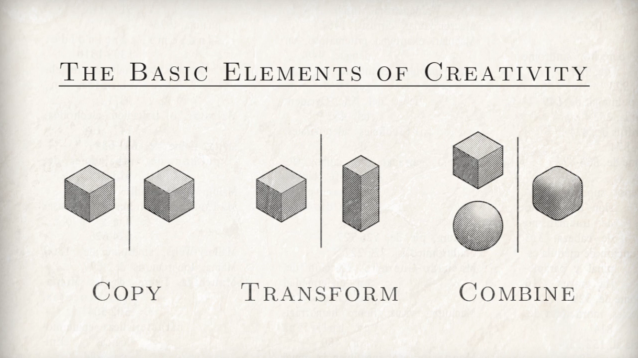
The fundamental element of biological evolution is a gene whilst Acts are cultural phenomena; its elements are not genes but meme’s,  (ideas, behaviours, skills).  These are subject to cultural evolution which by and large follows the same rules as biology: Copy - Transform - Combine.

Premiere as Birth of an Act
 After the creative development and rehearsal (pregnancy) of an Act, the first performance will be the birth. The Act happens and thus enters the world as an entity. No matter how great the preparation and how long the development, the first performance is like a newborn baby. It has arrived into the world but is far from ready to take on the harsh realities of competitive living and survival. This is why we do pre-views, or make sure we do our first performance in an underground cabaret, or generally, in an environment suitable for fragile infant acts. 
The act happens, but has little detail; broad strokes of simple gags, poses, and ideas are strung together like pearls on a string, still not flowing like a river. The Act has yet to learn to crawl, walk, talk and ultimately discover itself, to know who it is both in relation to others (the Crowd) and to itself.
Now begins the process of maturing and development from infant idea to full blown and realized Act.

Natural Selection on Acts

Strong acts are a cornerstone of any Showman's toolkit. Their improvement and development is paramount for rapidly turning them from a new idea to finished marketable product. By taking a closer look at natural selection I hope to illuminate a method for improving acts and a way for viewing mistakes in a more favorable light.

"Because art involves external forms, the testing mechanism operates also in the minds of other humans, in terms of their interest. Attention provides the selective mechanism of art. If a work of art fails to earn attention, it dies."

Natural selection is not a random process, it is guided by survival. On stage you live if the audience likes you and die if they don’t. Luckily stagecraft is more like a video game than real life. If you die it will be horrible and agonizingly embarrassing but if you're lucky you might get another chance. But in the end, if you keep dying on stage the job offers will dry up.

The copying in natural selection is not perfect, there will always be random elements. With each subsequent generation the offspring carries copying errors of different magnitude and importance. This is called mutation. 
Something very similar happens with acts. It doesn’t matter how well rehearsed your act is, how well scripted, as you take the stage unforeseen things will happen that will change your act from the idealized version in your mind. In acts we call this mistakes. The light blinds you, a heckler puts you off, a child walks onto stage or your skills temporarily elude you, the possibilities for error in the execution of your act are endless.
Some of these mistakes are big enough to loose your Crowd, ie. die but in amongst the bad mistakes there are serendipitous discoveries. Little changes which turns out to benefit the Act. A funny bit of improv, a line delivered in a strange way, a stumble that gets a laugh, funny moments, impressive moments, comments, groans from the crowd can all be discovered as you struggle for survival in your stage environment. 
After the show consider these. Write them down. By remembering and recreating these beneficial mutations you are making use of natural selection's heritability of favorable traits. 

Evolving novelty Acts
If you notice one extra laughter, one new positive response from the crowd with each performance, and manage to recreate it in your next show, you have a rapidly developing act. After 30 shows you have so many new moments there is little room for more new ones. Now a new selection process starts. The ante has just been upped for the survival of future mutations. Any new fortuitous discovery must not just be new, but better than the gag, groan, or wow it replaces. Because there is, of course, a time limit to how long an act could or should be. But remember to make note of any moments taken out, since you may want to add them back in later, use them in another act, or they might come in handy if you desire to turn an act into a full show.
By paying close attention to what each generation/performance offers, you can speed up the evolution of your act and thereby get more gigs/offspring. The stronger, more complex and perfectly formed your act is, the better it will survive. Adaptability has gotten humankind through many a bottleneck. The more generations/performances (or perhaps seasons) your act goes through the better equiped it will be be to deal with changing and challenging show environments.

From Chris Ede's exhibition Freakshow

Minggu, 26 Februari 2012

Max Wall: Funny Man


Max Wall, born Maxwell George Lorimer (12th March 1908 - 21st May 1990), was an English comedian and actor, whose performing career covered music hall, theatre, films and television. He is best remembered for his ludicrously attired and hilariously strutting Professor Wallofski. This creation notably influenced John Cleese, who has acknowledged Max Wall's influence on the creation of his own Ministry of Silly Walks sketch for Monty Python.
After appearing in many musicals and stage comedies in the 1930s, Wall's career went into decline, and he was reduced to working in obscure nightclubs. He then joined the Royal Air Force during World War II and served for three years until he was invalided out in 1943. Wall re-emerged during the 1950s when producers and directors rediscovered his comic talents, along with the expressive power of his tragic clown face and the distinctive sad falling cadences of his voice.
He secured television appearances and, having attracted Samuel Beckett's attention, he won parts in Waiting for Godot and Krapp's Last Tape.
On the afternoon of 20th May 1990, Wall fell at Simpson's Restaurant in central London, fracturing his skull. He never regained consciousness, and died early the next morning at Westminster Hospital. He was 82.

A ten minute biography from channel 4's (UK) Heroes of Comedy.

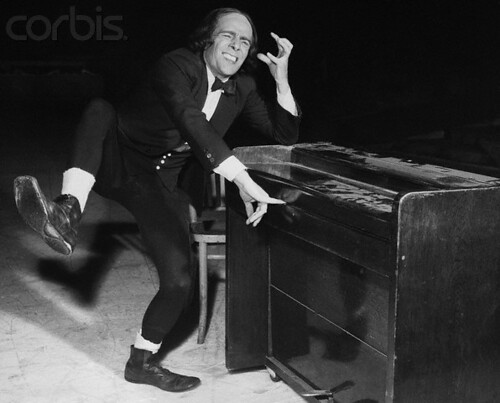
Max Wall attempts Rachmaninoff. From the 1975 film Max Wall: Funny Man.

A fine selection (edited with some repetitions to a ska track...) of Max's superb comedic physicality.
 
Facial Contortions of an older Funny Man


Jumat, 24 Februari 2012

Carnytube 12


Bob Williams and his Dog Louie. A great dog act where the dog does little to nothing with a stone face that would put even Buster to shame.

Arthur Worsley which one is the Dummy? Including his famous Bottle of Beer bit. (that being a frasze thought impossible to pronounce for ventriloquists.

The Toto Brothers. A "balancing and iron jaw novelty act" from 1918.

Kruger and Ward the tall and short of it. A strongman dwarf and a floppy contortionist rubberman also from 1918 it must have been a good year for Vaudeville.

Borrah Minevitch & His Harmonica Rascals


Selasa, 21 Februari 2012

Johnny Puleo's Harmonica Slapstick

 JOHNNY PULEO and his Harmonica Gang was a hard hitting kicking harmonica slapstick troupe.
 Apparently they were one of George Carl's sources of inspiration.
(Thanks to Ira Seidenstein for this anecdote.)

Wikipedia on Puleo:
Johnny Puleo (October 7, 1907 - May 3, 1983) was an American musician and actor, who specialized in playing the harmonica.
 As an actor he appeared perhaps most notably in the film Trapeze. But acting schmacting - the man was a fantastic slapstick Showman and a virtuouso on the harmonica.

I have included three clips, for those just browsing you'll see what you need in the first one or two, but for the arduous students of slapstick to see the permutations of the gags and the changes and additions to the act is very interesting.

Here is in all his angry Italian dwarf glory. Not pulling any punches. Funny as all that, from Hollywood Palace, 1965.

Hollywood Palace, 1966.


the Moulin Rouge in 1954.


Minggu, 19 Februari 2012

Trapeze

Trapeze is a 1956 circus film directed by Carol Reed and starring Burt Lancaster, Tony Curtis and Gina Lollobrigida, making her debut in American films. (and Johnny Puleo.)
Plot:
A crippled circus acrobat is torn emotionally between two ambitious young trapeze artists, one a talented young American and a less-gifted but beautiful Italian.

Filmed at the beautiful Cirque d'hiver, permanent circus building in Paris.

Johnny Puleo to the right.


Here it is in all its glory.

Sabtu, 18 Februari 2012

Carnytube - 11

Juggling...

Markus the Strongman Juggler. Real Old School.

Short, sweet, creative, and strangely fulfilling - by Greg Kennedy

Kris Kremo with his classic hat juggling routine. (1984)

Hat, cane and hatstand by Grant Goldie.

The Martial Juggling Arts of Get the Shoe.

Senin, 13 Februari 2012

Originality

“Originality is nothing but judicious imitation. The most original writers borrowed one from another. The instruction we find in books is like fire. We fetch it from our neighbor's, kindle it at home, communicate it to others, and it becomes the property of all.”
Voltaire

A while back a friend told me he really liked one of my ideas in an act I perform. It was a particular apparatus I had been developing over a three year period starting in early 2002. I thanked him. Then he told me he was going to make one for his own show. I said nothing. He asked me if it was OK. I said I didn’t feel good about it, but didn’t know what I could do to stop him. Now it is part of the finale in his show.

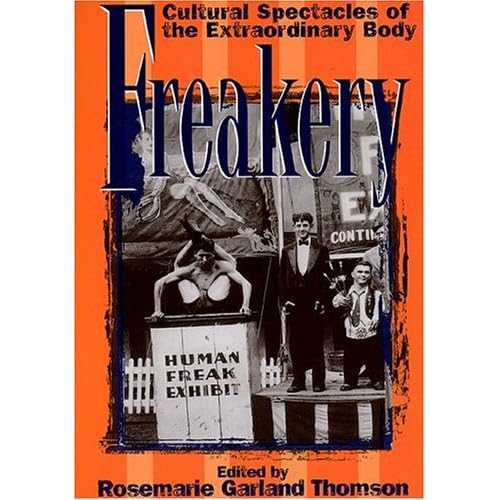
I collect and read circus books. The main part of the act my friend liked, the main skill, not the apparatus I perform the skill on came from a book. The book was a celebration of Robert Ripley, the man behind the world famous Ripley’s Believe it Not. The picture was of a man who could sit on a whiskey glass, with his legs behind his head. I later saw the same trick on a postcard where a man, calling himself Uncle Sam, sat on a little perch in the same posture. A man in almost the same posture, though not actually balancing but holding on, featured on the cover of a book called Freakery: Cultural Spectacles of the Extraordinary Body. Let alone that the feat has been "performed" within the Yoga tradition for who knows how long.
B K S Lyengar.
So in the end I had also “borrowed” something to create that act, even if I had specifically “dreamt” up the apparatus I performed it on. Does this mean there are no original acts?
Perhaps not.
But still people who see me get the feeling I am presenting something new and original, yet steeped in the Showman's Tradition.
I do think my act is original, but to understand this we might have to look a little closer at what that actually means.
In my presentation of the act: the music, specially created for the act by a fellow artist and dear friend Mikelangelo, gives form and structure to the flow of the act; a sequence of tricks mastered over the years;
my physicality; my visual gags; my running gag of confetti throwing;
and the final Dream Schpiel I deliver upon reaching the summit of the can stack - this symphony of elements united makes my act original. Not because the elements each sprouted into existence in a vacuum, but in their novel recombination and in my unique execution of it all.

For a long time I have been saying that if someone claims to have created something genuinely new, they just haven't studied history enough. This does not mean that there are no new or original acts created, on the contrary new and novel combinations and evolutions appear all the time, but what is seen as new by crowds are sweet remixes of the great showmen of the past - whether the creator knows it or not.


(Pic from Brain Pickings via Everything is a Remix.)

(There are more episodes of this excellent exploration of originality and creativity over at Kirby Ferguson's blog Everything is a Remix and they are all worth checking out.) 

On a whole, Crowds ("common man") have problems with that which is totally new. People like the idea of newness and novelty, but they do seem to prefer it if the "new" is firmly placed within some recognizable framework. But within a framework or tradition the very thing that makes it a tradition is the shared evolution of the idea or art form. Each new creator is borrowing from the same language and the same ideas. So to think of something brand new within a tradition is a contradiction.
Further, there are two sides to originality: 
- One, favored by the Crowds, is newness within a tradition: original, cutting edge, fresh. 
- The second is absurd or irrational newness: mad, freaky, aberration, kooky.

At the end of the second half of the last century I traveled as a street performer and one of my main obstacles was the inherent freakishness of my contortions and dislocations. As I bent and twisted, parents covered their children's eyes or simply walked away. Of course the children never had a problem with it. To them I was just like a character from any one of their favorite cartoons. I worked hard on my performance style and presentation and slowly but surely I found a slapstick, happy go lucky attitude which made the crowds tolerate my freakishness. Inspired by Keaton, Chaplin, and Arbuckle, what had been freaky fell within the framework of a tradition which crowds seemed to enjoy enough to stay for, and as I used to say in my street show: A show worth staying for is worth paying for. 
(Of course Freakishness is a tradition in itself. Freakshows and Sideshows was where I found my feet as a performer fresh out of my Magician Fathers wings, but that is a different story.)
 “Nothing is original. Steal from anywhere that resonates with inspiration or fuels your imagination. Devour old films, new films, music, books, paintings, photographs, poems, dreams, random conversations, architecture, bridges, street signs, trees, clouds, bodies of water, light and shadows. Select only things to steal from that speak directly to your soul. If you do this, your work (and theft) will be authentic. Authenticity is invaluable; originality is non-existent. And don’t bother concealing your thievery - celebrate it if you feel like it. In any case, always remember what Jean-Luc Godard said: “It’s not where you take things from - it’s where you take them to.” 
Jim Jarmusch.
If originality is 'merely' clever recombinations of old ideas, emotions and techniques what then is it that makes certain art and artists feel so new and 'original?' I think the answer lies in the artist's ability to make his material ring true in the hearts of Crowds.
Great art resonates with people. It stirs emotions and connects the beholder with ideas sublimely expressed by the artist in a way that feels new, illuminating and most importantly truthful. Truth is not something that is, but something that happens, an individual experience in the beholder.
Truth is only expressed through art  when it speaks to a Crowd. If it works it becomes truthful, undeniable and beautiful. A truth of this nature creates some sort of change in the viewer. A change in the way they perceive the world, or simply bringing forth a very specific or sublime emotion. The better the artist is at communicating with the Crowd, the more original the Crowd's experience becomes, and hence the more original the artist is perceived to be.

By reading circus books and studying the history of Showmen past and present, I am hoping to become the Showman of the future, the New Old School. 
"If I have seen further it is by standing on the shoulders of giants."
Isaac Newton (from his days as an acrobat in the Sideshow.)


Selasa, 07 Februari 2012

Carnytube - 10

Funambulist Marriage or Wedding on a tightrope, that's Circus love. (thanks Hey Rube circus)

An armless golfer divulges some secret limbless golfing tips.

A no arm no legs commedian. There is about a minute of american hyperbole before Brett Eastburn jumps onto stage. (here is a snippet of his "stand up" comedy.)

New Wheels on the Block, Norwegian band.

The Incomparable Mat Fraser as Sealo the Sealboy.


Sabtu, 04 Februari 2012

The Alchemy of Comedy


Here are some very fascinating thoughts on comedy as a delivery system of truth, and vehicle for Real Change. Chris Bliss divulges some important insight about the transformative power. Worth watching and contemplating.

"I want to talk [about] the unique power the best comedy and satire has in circumventing our engrained perspectives — comedy as the philosopher’s stone that takes the base metal of our conventional wisdom and transforms it, through ridicule, into a different way of seeing, and ultimately being, in the world… It is about communication that doesn’t just produce greater understanding within the individual, but leads to real change… communication that manages to speak to and expand our concept of self-interest.”

"What gives comedy its edge in reaching around peoples walls is the way that it uses deliberate misdirection. A great piece of comedy is a verbal magic trick. When you think its going over here and then all of a sudden you are over there and there is this mental delight followed by a physical response of laughter which not coincidentally releases endorphins in the brain. Just like that you have been seduced into a different way of looking at something. Because the endorphins have brought down your defenses."

This last quote is a apposite description of the mechanism which is the core of our Crafts power to change the world. Although comedy is the specific subject of this talk I believe other aspects of the Showman's craft like beatboxing, acrobatics or magic can be used to trigger the necessary emotional response in a Crowd that will lower their fences and listen in the correct way.


The goal for an Illuminated Showman is to gain the power to create change with his Art. A key to this is to make the Crowd listen in the right way. You have to get their attention, win their trust, make them like you enough to want to follow you.
Make them move beyond listening with their mind to listening with their heart. For as the Great Moldavio of Blacksea Gentlemen fame so aptly put it:
"(You can) perceive with your heart what your mind can not know."

Jumat, 27 Januari 2012

Carnytube - 9

Indian pole as opposed to Chinese pole.

The one and only incomparable Tom Noddy, the original Bubble Man. This is from the Paul Daniels show. My Dad recorded this off the TV and I watched it countless times.

Pachelbel's Cannon on Crystal glasses. Otherworldly and eerily beautiful.

Feline Pugilists anno 1894, filmed by Edison

Further feline Pugilism in 1937

Kamis, 26 Januari 2012

Mark Ryden vs Catholic Church

Jajo
Mark Ryden's Saint of Clowns


Jajo the Patron Saint of Clowns.
1994 - Oil on Panel. 15" x 20".


The Baptism of Jajo. 
2003. Oil on Panel. 3.75" x 3.75".

Baptism of Jajo. 2003 - Graphite on paper.

In the Baptism we see a Clown spirit present in the form of a child's toy. His presence symbolizing the significance of what transformation the Baptism will have. It is in the toy clown we see the auguries of what is to come for this very special child.

VS

Genesius
The Catholic Saint of Clowns

The Conversion of St Genesius. By Giovanni Battista Pozzo.


The Catholic Saint of Clowns.
"While St Genesius’ mock baptism on stage was not a valid baptism, the intention to baptize not being present, through his martyrdom he is considered to have been “baptized by blood”. Right from the beginning the Church was faced with the position of those catechumens who were put to death for the Christian faith before being baptized and in this sacrifice she recognized that they were baptized by the very sacrifice of their lives for Christ and his Church. "
(From the Fraternity of St Genesius.)

x

Mark Ryden's Baptism of Jajo seems to be done by the blood from a Stigmata, miraculously appearing wounds corresponding to those of Jesus on on the cross. It is also a "baptism by blood."
The painting is from his series of miniatures called Blood. A CD was released in conjunction with the exhibition and you can hear the Baptism of Jajo soundtrack here. If myspace isn't satisfying you can get it on itunes.

Senin, 23 Januari 2012

We do Real Magic

In perusing my Dad's dusty library of magic books and manuscripts I came across a very fine collection of essays on the Art of Magic by Richard Osterlind called Making Real Magic. It is part of a trilogy of books and is very worth getting your hands on. This man is a superb and interesting thinker as well as a fine performer of mentalism.

He ponders, in the title essay from the collection, how magic can be real and not just presentation of cleverly performed deception, a topic that has been delved into on this blog before. The way he answers this is as simple as it is ingenious.
"My answer is in the following definition. Magic is the art of creating mystery and wonder. The first key word is mystery. There is no mystery in true miracles!"
If our goal as Magicians or Illuminated Showmen is to create mystery and wonder then performing miracles and supernatural phenomena makes the heart of the mystery, the not knowing, evaporate. Even though a miracle or supernatural event is an obscure and tenuous explanation it is an explanation non-the-less. Mystery, as I've blogged about before, is only powerful and alive if there is no explanation.

If a person actually has psychokinetic abilities, i.e. the power to move objects without physically touching them, an exhibition of these powers would no longer be mysterious. Instead it would be a demonstration of a skill not unlike juggling or expert card mechanics.
If there is an explanation then the Mystery dies.
So if we are to be purveyors of genuine Mystery, it means doing impossible things with no explanation what so ever. Or at least not one that rules out all others with certainty.
"The appeal of the magician is that he or she is able to accomplish something that an ordinary mortal should not be able to do. Please ponder this thought in depth. The
reason mystery penetrates into our very souls is it gives hope that un-solvable problems in life are solvable. The wonder of magic is that it tangibly demonstrates that dreams can become reality. If a magician is mortal and can make magic, then the audience, who is also mortal, has hope!
We owe it to our audiences and ourselves to do real magic. We should not be trying to raise ourselves above the level of our audience. We need to show them that we are just like them and can still do these things. We want to be an example of how human endeavor and ingenuity can achieve great results."
The Shaman is human but one that has gone through ordeals, sickness and who have learnt lessons that gives him unusual but not supernatural powers. As with the Shaman it is with the Illuminated Showman. We study secret Arts, strange feats and clever turns in the pursuit of our Craft and through this we can, with the right frame of mind, feel the heart of Mystery beat inside us and thus be able to show it to others. We inhabit the same planet as the Crowd but we live in different worlds. In the Showman's world the impossible becomes possible, it just takes a little more time. The Bubble Man Tom Noddy says when his physicist friend tells him it is impossible to blow a square soap bubble, "Nothing is impossible." Then he proceeds to blow one. After which he comments: no one should proclaim anything impossible until you have spoken to the Vaudevillians.
In this way what Illuminated Showmen does is not supernatural, but impossible. What we have is not special powers but special abilities.
Osterlind further claims Magicians actually does the impossible, pointing out that they don't just create illusions of the impossible.
"Since the magician starts at point A and the impossible is at point B, if he gets there, then he has accomplished it! It is not an illusion. In a very real sense, he has done the impossible!"
"When you look at the stars at night, you are seeing the light that shone from them far in the distant past. Some of them may not even exist anymore.
The world as we see and experience it is not what we think. Our perception of sights, sounds, smells and other senses can be altered by many factors. Reality is only what we believe it to be at a given moment. To control another person's perception is to control another person's reality. If you can make another person's reality into something wonderful, you can do real magic."
 What else would be worth pursuing but real magic in our performances. Real magic moments that will be planted as seed in the minds of our Crowds. Seeds of Change. Seeds for Thought. Surely that can't be asking too much of us, can it?


“When you take any activity, any art, any discipline, any skill, take it and push it as fas as it has ever been pushed before, push it into the wildest edge of edges, then you force it into the realm of real magic.”
- Tom Robbins

Jumat, 20 Januari 2012

Carnytube - 8

Harry Houdini`s rope escape

A potential Circus Dog

Apparantly this is the worlds best tricks. Either way it is a sweet compilation.


And here is some insane Parkour by David Belle.

Here we go skipping.

And a purveyor of the almost forgotten art of hoop rolling. I read about this is Charlie Holland's book Strange Feats and Clever Turns but haven't seen a full act until now.

a CAnibal Clown short film by the ever great Carnival Cinema 
Featuring Derek Ives, Claire Bartholomew, and Nikki Wilkes.


Cardoso Flea Circus Live in Paris from Maria Fernanda Cardoso on Vimeo.


Sabtu, 14 Januari 2012

Charles Bukowski - Genius of the Crowd

"Some people never go crazy. What truly horrible lives they must lead."

Bukowski was a writer. He wrote it all. Poems, short stories, novels, screenplays. He wrote it all just as he saw it. Once a long time ago at about five to eight in the morning on my way to do street shows in Coven Garden, London, I was asked why I liked Bukowski. I said - because he writes it like it is. Then we got to the pitch and all the street performers began pulling numbers out of a hat to decide who plays first. It was a summer day in july. I spotted a fellow performer which I knew also read Bukowski and asked him why he read the words of the dirty old man. He writes it like it is he said. I smiled.

Here are some thoughts on the dark side of the Crowd - of the Average people. For the Illuminated Showman must remember that the Crowd is a Beast. Given the oppertunity it will eat you. It can be tamed but is will always be wild. Like the snake in the Little Prince, it could bite at any time. Such is its nature.


There is a part of the poem missing out of this video excerpt from Born Into This. So here the poem is in full. A warning to budding Showmen, and a reminder to those who have experienced


The Genius of the Crowd

there is enough treachery, hatred violence absurdity in the average
human being to supply any given army on any given day

and the best at murder are those who preach against it
and the best at hate are those who preach love
and the best at war finally are those who preach peace

those who preach god, need god
those who preach peace do not have peace
those who preach peace do not have love

beware the preachers
beware the knowers
beware those who are always reading books
beware those who either detest poverty
or are proud of it
beware those quick to praise
for they need praise in return
beware those who are quick to censor
they are afraid of what they do not know
beware those who seek constant crowds for
they are nothing alone
beware the average man the average woman
beware their love, their love is average
seeks average

but there is genius in their hatred
there is enough genius in their hatred to kill you
to kill anybody
not wanting solitude
not understanding solitude
they will attempt to destroy anything
that differs from their own
not being able to create art
they will not understand art
they will consider their failure as creators
only as a failure of the world
not being able to love fully
they will believe your love incomplete
and then they will hate you
and their hatred will be perfect

like a shining diamond
like a knife
like a mountain
like a tiger
like hemlock

their finest art


x

(Hemlock was the poison used to execute Socrates for inciting youth and not following the state's gods. The Genius of the Crowd chose to kill him rather than answering his questions.)

I mentioned the poem was an excerpt so here is the documentary Born Into This in full too. (For some reason it blogger wont link to it on my page...)

Finally here is my favorite poem. The more you have read, the more you have seen, the more you know the dirty old man the weightier this poem gets.


Bluebird
Magritte's Therapist. The birds inside.

there's a bluebird in my heart that
wants to get out
but I'm too tough for him,
I say, stay in there, I'm not going
to let anybody see
you.

there's a bluebird in my heart that
wants to get out
but I pur whiskey on him and inhale
cigarette smoke
and the whores and the bartenders
and the grocery clerks
never know that
he's
in there.

there's a bluebird in my heart that
wants to get out
but I'm too tough for him,
I say,
stay down, do you want to mess
me up?
you want to screw up the
works?
you want to blow my book sales in
Europe?

there's a bluebird in my heart that
wants to get out
but I'm too clever, I only let him out
at night sometimes
when everybody's asleep.
I say, I know that you're there,
so don't be
sad.
then I put him back,
but he's singing a little
in there, I haven't quite let him
die
and we sleep together like
that
with our
secret pact
and it's nice enough to
make a man
weep, but I don't
weep, do
you?


Rabu, 11 Januari 2012

Lessons from the Way of the Showman - 62

Performing is sharing.
It is the core of our Craft, for it is in the moment where the Showman divulges his material to the crowd our Art appears.

The Showman practices, prepares, seeks knowledge, wisdom, jokes, gags, pratfalls, tricks, methods, stories, moves, dances and so forth. Finding joy in seeking and refining all this is the Love of the Craft, but performing this before a Crowd is when we Create Art.